

A Pastor in the High Desert: Life and Ministry in Rural Nevada
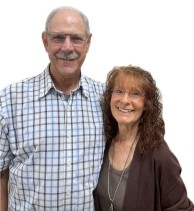

How does a city boy prepare to pastor a small church in rural Nevada?
He doesn’t. Not really. Not in the ways that matter.
I came out of Los Angeles, trained at Grace Community Church—a congregation of ten thousand people where ministry ran on rails. If I needed something for a Bible study, children’s ministry, or Sunday School, it was available before I finished asking. I led home Bible studies, taught Sunday School, and led music for an Awana program with more than 250 children and a four-man band. Excellence wasn’t the goal; it was the expectation.
Sunday mornings were a symphony of order: full choir, skilled musicians, ushers, security teams, color bulletins, immaculate grounds. Ministry felt smooth, structured, and supported.
Then the Lord called me to Orovada, Nevada.
A Place Few Outsiders Understand
Orovada isn’t even a town. It’s a Census Designated Place—an unincorporated stretch of high desert with about a hundred people scattered across thirty miles. There is a small post office and a gas station. On Sundays, I average around twenty people coming for worship. Percentage-wise, that’s nearly a fifth of the entire population.
Life here is different. Ministry here is different. And the people—farmers and ranchers—live a life few outsiders understand.
Farmers never stop. They’re working fields, harvesting crops, hauling product, repairing equipment, or preparing for the next season. Ranchers are feeding livestock, moving herds, mending fences, checking on calving, branding newborns, and fixing machinery. Their work is relentless.
Because of that, I rarely see the men in church.
“Their lives are dictated by weather, seasons, and emergencies—not by calendars or programs.”
Earning Trust the Rural Way
Small communities are close-knit, but that doesn’t mean quick to open. Privacy is part of the culture here. People don’t share personal struggles easily, and they don’t invite you into their lives until they trust you.
For a long time, we were “outsiders.” We attended every community event, introduced ourselves to everyone we could, and slowly—after three years—we’re beginning to feel accepted.
I’ve tried to start a men’s Bible study. No one came. I tried a monthly men’s breakfast. Same result. The answer is always the same: “I’m too busy.” And they’re not lying.
The women’s Bible study, led by my wife, is thriving. The women are hungry for fellowship and for God’s Word. But the men remain elusive.
I have one elder who operates a 2,000-acre farm. His heart is for the church, but there are times when circumstances simply won’t allow him to attend. That’s rural life.
Ministry in the Fields
If I want to reach the men, I have to go to them. I visit them on their farms and ranches. I work alongside them whenever I can. I’ve learned to run a swather and help with the harvest because they’re short-handed. I’ve repaired equipment in the fields. I’ve stood in the dust and grease and heat with them.
And still, spiritual conversations are rare.
But at the very least, the men know I care about them. They know that I—and the church—am here for them whenever they need us. Sometimes that foundation of trust is the first step toward anything spiritual.
Rural people are self-reliant. They fix their own machinery. Their shops and barns are stocked like hardware stores. They borrow and trade equipment freely. They depend on themselves, and because of that, many don’t see their need for spiritual training, fellowship, or even God.
But they do respect hard work and authenticity. In rural Nevada, a pastor earns credibility not by polish, but by presence.
“In rural Nevada, a pastor isn’t just a shepherd of souls; he’s often the community handyman, counselor, mediator, and friend.”
The Realities of Rural Ministry
Ministry here requires more than preaching and teaching. It requires practical skills. I’ve used my background in carpentry and flooring to help residents when called upon—installing floors, repairing structures, building decks, and fixing what’s broken.
And then there’s the financial reality. Most rural churches simply cannot support a full-time pastor with a family. A man serving here must either be bi-vocational, a missionary pastor, or have retirement income. In my case, retirement income is what allows me to be here. Without it, rural ministry would be impossible.
Yet serving in a smaller church has given me something I never had in the city: time. Time to reflect. Time to write. Time to turn decades of service into something that might help others.
In the quiet of rural Nevada, I’ve written two books—Bearing the Sword, Not in Vain, published last October, and It’s a Calling, to be released soon. Both books reflect my years in the LAPD, the U.S. Coast Guard, and as a private investigator—and more importantly, the faithfulness of God through every chapter of my life.
The Work No One Sees
In our small church, we have two pianists who occasionally attend because they often travel to Idaho on weekends. So normally it’s just me and my guitar. Most Sundays, I start the service, lead prayer, read Scripture, preach, and close in prayer. It’s the “Shelley show,” not by preference but by necessity.
We live on the church property, and when we arrived in 2022, the parsonage was unlivable. After a year and a half of doing a complete remodel and working five or six days a week, we finally moved into a new home. Before that, we lived in our fifth-wheel trailer on the property.
Living on site makes us the groundskeepers and maintenance crew. We mow the grass, trim the trees, rake the leaves, fix plumbing, paint rooms, vacuum floors—whatever needs doing. Not because we have to, but because there’s no one else to do it.
And honestly, we consider it a privilege.
The Heart of Rural Ministry
Rural ministry is slow, but deep. You don’t measure success by numbers or programs. You measure it by trust earned, by conversations that finally happen, by the quiet ways God works in a place where life is hard and distances are long.
You become not just the pastor of a church, but the chaplain of an entire valley—called upon in crisis, welcomed in sorrow, respected for simply showing up.
And that’s the heart of rural ministry.
You don’t come here to be served.
You come here to serve.
You don’t come here for crowds.
You come here for souls.
You don’t come here for comfort.
You come here for calling.
God didn’t send me to Orovada to recreate Los Angeles. He sent me here to shepherd the people He placed in this valley—twenty at a time, one conversation at a time, one act of service at a time.
And in the quiet, in the dust, in the long stretches of solitude, I’ve learned something I never learned in the city:
Sometimes the smallest churches require the biggest faith.
Sometimes the hardest soil produces the deepest roots.
And sometimes God sends a city boy to rural Nevada not to change the people, but to change the pastor.
Shelley Gale is a retired LAPD Officer and retired U.S. Coast Guard Petty Officer whom God led to the high desert of rural Nevada, where he now pastors Orovada Community Church. His books, Bearing the Sword, Not in Vain and the soon to be released It’s a Calling, chronicle his journey through law enforcement, military service, private investigations, and ministry—and the faithfulness of God through it all.
Shelley and his wife, Dayle, his high school sweetheart and wife of 54 years, live on the church property, caring for their small ranching and farming community one family, one conversation, and one act of service at a time.
Note: The views expressed in this article are that of the author and do not necessarily reflect the views of other contributors on this site


Comments